
Leonardo da Vinci (1452-1519). Knowledge and Beauty in the High Renaissance
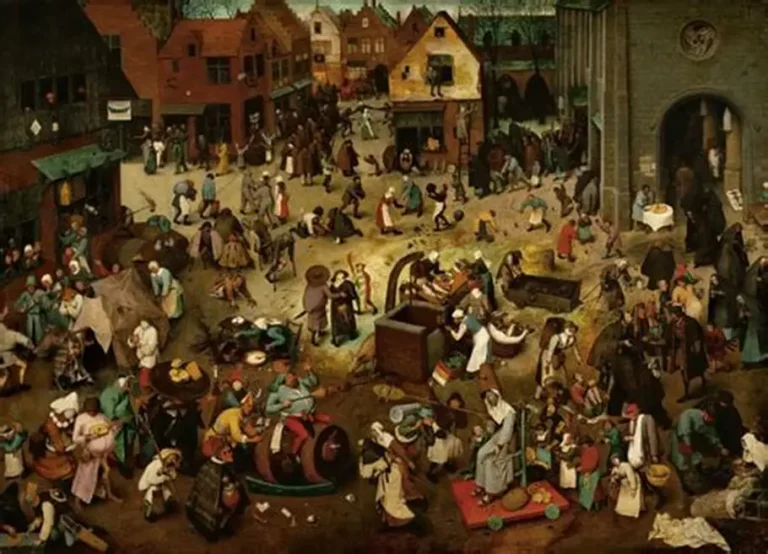
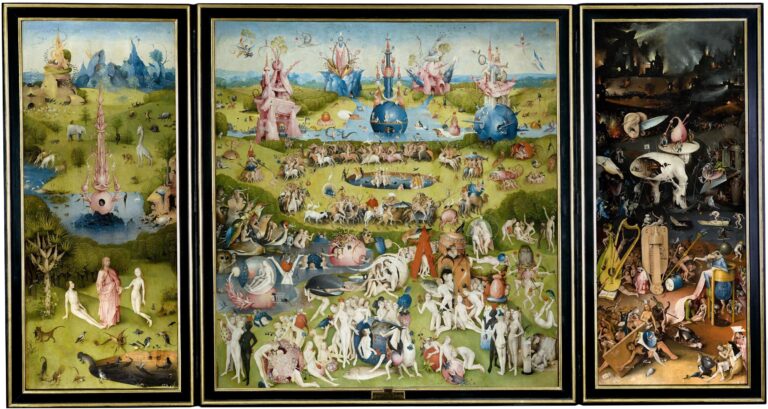
We are moving back in time a bit in this lecture. Bosch and Pieter Brueghel developed their styles independently from the main current of European painting during the 16th century. Most artists at the time followed the example set by three masters: Leonardo da Vinci, Michelangelo, and Raphael. We now turn our attention to them, beginning with the oldest of the three: Leonardo. He may be the man portrayed here, though we are not certain. Leonardo is best known today as a painter, but he was also a scientist, engineer, architect, sculptor, musician, and courtier. He epitomizes the boldness of the Renaissance, when confidence in human capability led to the belief that one could excel in many fields. Born in 1452, Leonardo was trained in Florence and was very much a product of that city’s cultural and artistic environment. He worked for the Medici court there, and later for many years in Milan under Ludovico Sforza as both artist and military engineer. At the end of his life he was invited to France by King Francis I, where he died in 1519. His interests in art and science were inseparable, like two sides of the same coin. One of his drawings shows studies of how water behaves when interrupted by an object and when falling into a pool. His intention was not to capture beauty but to understand natural processes. Drawing was his tool for inquiry. He applied the same approach to the human body, producing many anatomical studies. Imaging was at the forefront of scientific research at the time, and Leonardo was a leader in this field. Painting was only one of his many activities. We know of only about thirteen paintings by him, depending on disputed attributions, and several are damaged or unfinished. In spite of this, his influence was enormous. Leonardo embodies the transformation of Renaissance painting from the 15th to the 16th centuries. Generations of artists had sought to achieve the grandeur and realism of antiquity, known mainly through sculpture. His Last Supper, begun around 1495 on a wall of the Convent of Santa Maria delle Grazie in Milan, represents the culmination of this effort. Though badly damaged due to his experimental technique on plaster, enough remains to show that Leonardo achieved the early Renaissance goal. His figures are monumental, and their expressions and movements are lifelike to an unprecedented degree. Together with Michelangelo and Raphael, Leonardo set the standards of ambition and achievement that defined European art for centuries. Two key features of his art are evident here. First, the depiction of expression. Since antiquity, one of the goals of art was to represent human passions and feelings. In his notes, later compiled into a treatise on painting, Leonardo wrote that an artist must paint “man in the intention of his soul.” In The Last Supper, Christ has just announced that one of his twelve followers will betray him. He appears sad but serene, while the apostles react with terror, disbelief, or questioning. Earlier depictions of this theme were solemn; Leonardo’s version is high drama, a theatre of human emotion. Judas, identified as the betrayer, raises his head in denial. Each gesture conveys the presence of a living spirit. The painting became famous, and copies and prints were used for generations to teach expression. In later reproductions, the apostles’ reactions were exaggerated, but they reveal the qualities of the original: paradigms of psychological states, universal in meaning. Second, Leonardo carefully worked out the relation of each figure to the others. Despite the variety of gestures, there is strong order and harmony. The characters’ movements are linked, contributing to the unity of the whole. It seems odd to discuss Leonardo without mentioning the Mona Lisa, the most famous painting in the world. Its fame is perhaps its most striking feature today. The painting is not simply an image of a person but an idea of a person. Leonardo wrote that art was a mental thing. The famous smile and atmospheric background make it poetic, but its celebrity has turned it into a sight, like the Great Wall of China or the Eiffel Tower. This fascination imposes a mental filter that hinders true contemplation, and practical barriers make it impossible to view the painting properly. Another portrait, Lady with an Ermine (c. 1490), is less famous but equally beautiful. It likely depicts the mistress of Ludovico Sforza. Leonardo sought to paint beauty and grace, qualities hard to define without his works. Beauty, for him, meant idealized shapes. The contours of the face, shoulders, and hands are regularized, leaving behind imperfections of reality to aim at perfection. The forms relate to each other—the face of the ermine rhymes with the hand and face of the woman—creating a unified whole. Grace, described in Baldassare Castiglione’s Book of the Courtier as effortless refinement, is here turned into image.
Images in video: Leonardo da Vinci (1452-1519). Knowledge and Beauty in the High Renaissance
Detail, Leonardo da Vinci, Possible self-portrait, c. 1513, drawing, red chalk,
Turin, Biblioteca Reale
Detail, Leonardo da Vinci, Studies of water passing obstacles and falling into a pool, c. 1508-1509, drawing, 298 x 207 mm,
Windsor Castle, Royal Collection
Leonardo da Vinci, The Last Supper, c. 1495, 460 x 880 cm,
Milan, convent of Sta Maria delle Grazie
Pieter Soutman, after Leonardo da Vinci, The Last Supper, etching, c. 1615-1620, 298 x 1000 mm
Photo of the display of Leonardo da Vinci´s Mona Lisa,
Paris, Musée du Louvre
Leonardo da Vinci, Portrait of a Lady with an Ermine, c. 1490, 53 x 39 cm,
Krakow, The Princes Czartoryski Museum
Michelangelo (1475-1564). Renaissance Grandeur
Further reading
Michelangelo (1475-1564). Renaissance Grandeur