PEPO CENNI DI NICKNAMED CHIMABUE
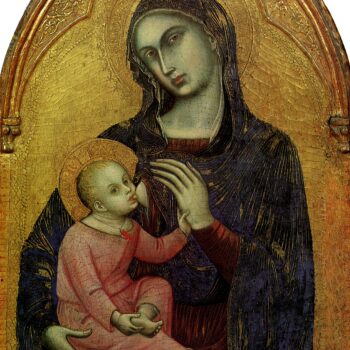
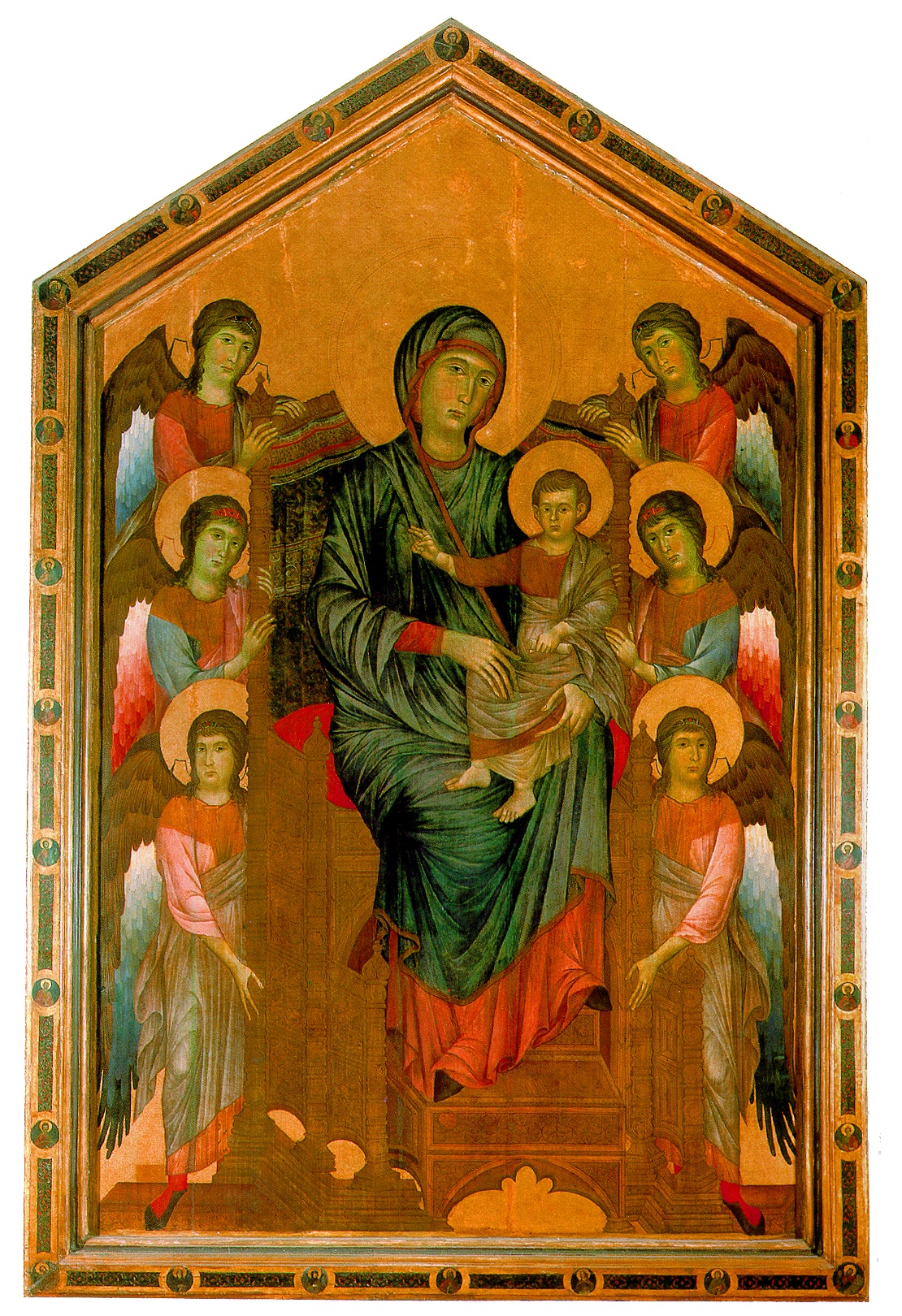
Madonna with the baby on trona in a surrounding of angels.
apprx. 1240 – Florence, after 1302
Wood, 427 x 280 cm. Comes from San Francesco’s church in Pisa; INV came to Louvre in 1814. 254 (S/AR)
1250-1500
Chimabue (a real name of Cenni di Pepo) the Unique opportunities of the western painting belonging to great opening of mankind were for the first time shown in Tuscany in recent years 13th century. This process is provided in Louvre with a big completeness. Not accidentally the director of the Museum of Napoleon baron of Vivan-Denon who had a particular purpose – to represent the early Italian school in a collection – acquired altars from San Francesco’s church in Pisa. After recovery of the French monarchy in 1815 the commission authorized to return the Tuscan patterns, most likely, did not claim them.
The altar, one of shutters of which wears name with the baby on trona, the biographer George Vazari the work Chimabue though now the second shutter which is in Florence is supposed later on time and is attributed to Duccio, Siena “double” of Chimabue. This altar opens itself a new kind of painting – painting which will always wear a print of brightly personal creative persons. The western painting is an art of individuals. Memory of such person as Chimabue, was alive and three centuries later – when the chronicle of all this era, “Biographies of the best-known painters, sculptors and architects” George Vazari was written.
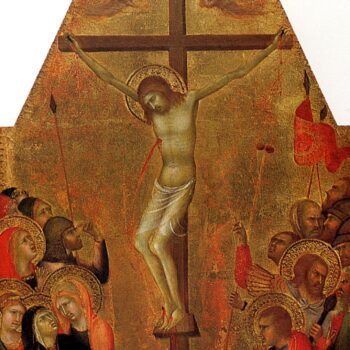
According to Vazari, Chimabue would destroy the pattern rather, than carried out any condemnation even if it was its characteristic. It had reputation of the pighead for what got a nickname “Bull head”. At images of Chimabue there is a special quality – in them strength which sounds is felt it is tragic, how in nowadays lost Crucifixion from Santa-Croce’s monastery, discharge, as in Luvrskaya 0¤ ¤Богоматери _0_1_0 with the baby on trona. The Louvre patterns by the size are the largest in this section, and transition from the accented linear of vizantin style (manere greec) of in that special flowability of lines which will become essential sign of the Tuscan art is most brightly reflected in it.