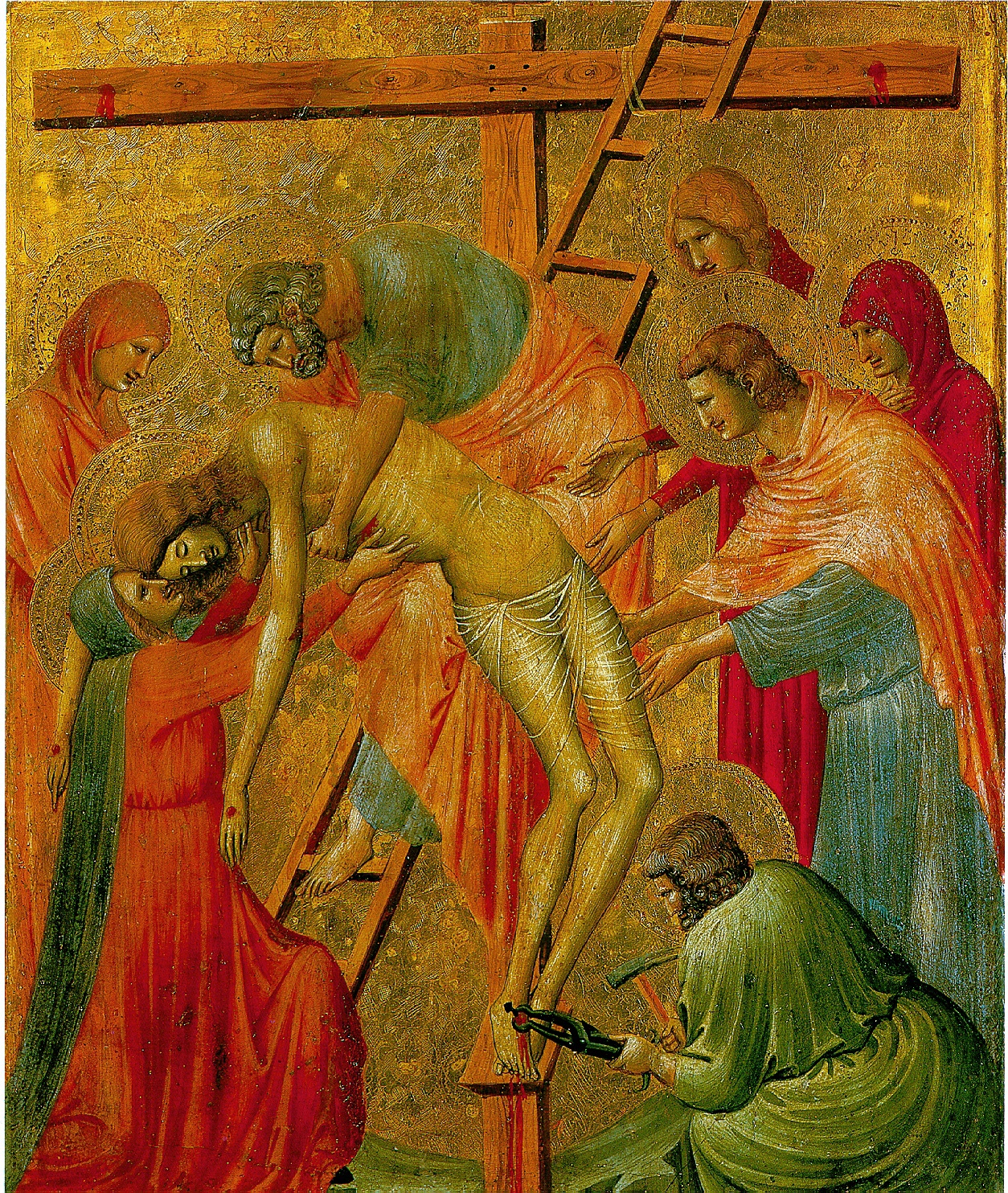
RIMINI PIETRO VYES
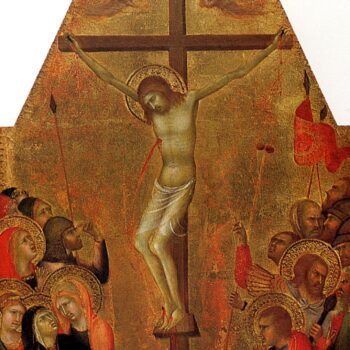
Taking off from a cross, 1330/40.
Worked in the first half of the 14th century.
Wood, 43 x 35 cm. R.F came to Louvre in 1932. 2287 (S/AR)
Giotto di Bondone
The picturesque image especially meant to franciscan order much. The cartridge of order, St. Francis of Assisi was read not only Christ’s heir, but also his alive embodiment, imitatio Christi. This figure in itself was in the way sacral as Francis received on the body Christ’s wounds, stigmas. This story allowed to show a diversity of poses and gestures, namely it will become a source of new processes in painting.
Francis’s history (respectively, and the beginning of history of the Franciscan order) is provided in a nave of church to Assisi in twenty eight frescos written with such serial tridimensionality what art did not know yet. The author of these scenes opening a new era in painting in the history of art figures as the Master St. Francis, and scene of stigmatization St. A francis, happened in 1224, the artist called the Master of a funeral imprinted.
. The francis receiving stigmas with three scenes from life comes from San Francesco’s church in Pisa. The picture is painted on a board, its central image is attributed to Giotto. Small zhitiyny scenes are performed by other hand, they repeat frescos in Assisi and are written by someone from subforemen St. Francis; the main scene with the image of stigmatization shows an output to monumentalism of new sense. The direction in painting which began with Giotto implied interpretation of space of action as three-dimensional and actual that forced out that installation on devout contemplation by which Chimabue was guided. Such innovation gave to figures as it is visible on a kneeling figure St. A francis, the feeling of mass, and a huge role in it were played by the lines passing an axial load – pressure and countersteering to it. Painting more narrow will never lose since then these qualities.