
The Renaissance a Fundamental Break with the Past
The Renaissance is a period in the cultural history of Europe that follows the late Middle Ages. It took place during the fifteenth and the sixteenth centuries. During the Medieval period, all areas of life had been dominated by the Christian religion. It was the Renaissance that initiated the path from a religious explanation of things to reason and science. Human beings developed a new confidence in their own abilities and an attitude of curiosity towards nature and reality. This was a dynamic time defined by a new faith in progress. The Renaissance is the beginning of the modern era. The ideas about life in the world that were forged at this time, slowly but surely developed into our own scientific rationalism.
They paved the way for discoveries in medicine, biology, physics, mathematics, engineering, geography and many other fields from which we have benefited. The art of painting occupied an important place in society at the time and a prestige, that it still enjoys, derives in part from that time. One thought on all this before we start talking about painting. The idea that the Renaissance is the opening bracket of a historical period, that we still live in, is changing.
Our faith in progress which we have inherited from the Renaissance is more in doubt at the beginning of the twenty-first century than it was in the past. We now know that progress can lead not only to good but also to dangerous places. It has made us capable of destroying ourselves on the planet through war, excessive population and consumption and through the abuse of natural resources. It increasingly seems that the period that started with the Renaissance has ended and that we now live in postmodern times. Only time will tell if this is true. This will affect how we think about Renaissance art. It now seems as the art from the beginning of the era in which we still live as the art of a period that’s one of the pillars of our culture.
But in the future it may seem as the expression of a more disconnected past. In terms of the history of art,
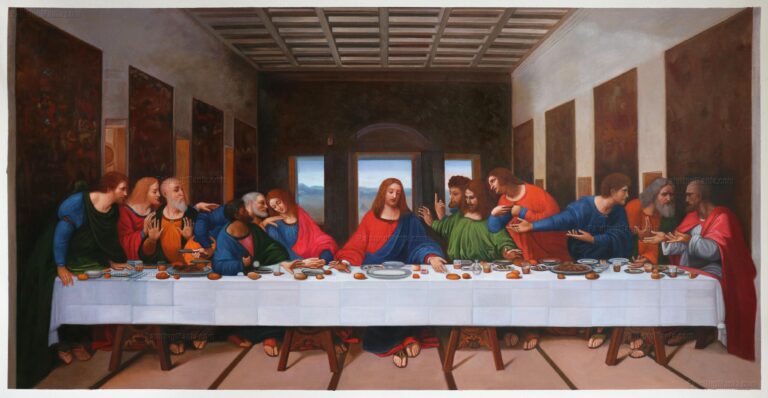
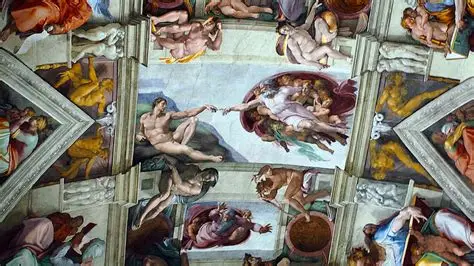
we use the term Renaissance to refer to art made in Europe during the fifteenth and the sixteenth centuries.
The most important centers for the production of paintings and the creation of artistic trends, during this period, were in Italy and in what is now Belgium. The image on the screen shows Florence, one of the focal points of Renaissance art and culture. By the sixteenth century, the Renaissance style had spread throughout Europe and also to the Americas. As it mixed with different cultures it lost some of its defining features and it gave way to new hybrid artistic languages. Several features define Renaissance painting. One is the will to be more realistic than painting had been in the past. This reflects the new curiosity about the natural world that we have mentioned. Artists achieved this goal by studying their surroundings, by learning to reproduce the three dimensional nature of objects and space and by representing humans that moved and expressed their feelings. A second defining feature of Renaissance art is a strong will to recover what was perceived as the greatness of classical antiquity. It is this feature that is reflected in the word Renaissance which means rebirth in French. Sculptors and architects copied ancient buildings and sculptures that existed in Europe,but very few ancient paintings remain. Painters filled their works with motifs, borrowed from ancient sculpture and architecture, and they also imitated works by ancient painters that they learned about from ancient Roman texts.
Most important was an encyclopedia titled ‘Natural History’ by Pliny the Elder. Here we see a print by the late Renaissance Dutch artist Hendrick Goltzius from 1592. It shows two men studying the giant sculpture known as the ‘Hercules Farnese’ which was discovered in Rome in the 1540’s. Artists from all of Europe traveled to Italy to see ancient remains and in Rome and other cities there was an avid search for antique monuments. It is important to remember that admiration for pagan antiquity coexisted with a Christian faith at this time and that much of the art made during the Renaissance was Christian. This can seem like a paradox to us but for most contemporaries it was simply how they understood life. Because of the interesting classical antiquity many Renaissance paintings showed mythological subjects. There was also a huge increase in portraits. This reflects a central place that was assigned to human beings during this time. This detail of a self portrait by Dürer shows the artist in front of the world that he studied and painted. He has proudly signed his work just under the window. Renaissance artists in Italy and the North did not paint in the same way. The Northern version of the Renaissance aimed primarily at being realistic and expressive.
The Italian Renaissance was more drawn to the reproduction of ancient ruins because more existed there. Italian artists also placed a greater emphasis than their Northern counterparts in creating ideal beauty, based on the ideas of a harmony and proportion, as manifest in ancient art. In this detail from Leonardo’s ‘Annunciation’, painted in the 1470’s, we find a strong and obvious effort to create beauty. Look at the melodious pattern formed by the trees and look at the curves formed by the profile of the face of the Angel. And look also at the beautiful gestures of his hands. Rarely in the entire history of art has the creation of beauty been as important for painters as it was during the Renaissance in Italy. This is one of the most rewarding features of the art of painting. Beauty makes us soar
and brings happiness. We will see in this course that beauty was not always understood in the same way
and that at times artists fought to liberate themselves from it. Finally a word on chronology. Even though we speak of the Renaissance as one single period, important changes occurred during this time. In this course we will study Renaissance artistswho worked at different moments during the fifteenth and the sixteenth centuries.
Images in Video: The Renaissance. A Fundamental Break with the Past
Detail, Pietro Perugino, The Delivery of the Keys, 1481-1482,
Rome, Vatican City, Sistine Chapel
Detail, Hans Holbein, Portrait of Nicholas Kratzer, 1528,
Paris, Musée du Louvre
Abraham Ortelius, Typus Orbis Terrarum, 1570, map
View of the city of Florence
Hans Hoffmann, Hare in the Forest, c. 1585, 62 x 78 cm,
Los Angeles, The J. Paul Getty Museum, digital image courtesy of the Getty’s Open Content Program
Hendrick Goltzius, Hercules Farnese, engraving, 1592, 41.8 x 30.1 cm
Detail, Leonardo da Vinci, Annunciation, 1472-1475, 98 x 217 cm,
Florence, Galleria degli Uffizi
Detail, Albrecht Dürer, Self-portrait, 1498, 52 x 41 cm,
Madrid, Museo Nacional del Prado